Skip to content
Kirkland EV Charger Repair

Home EV Charger Help in Kirkland

EV Charger Repair in Kirkland, WA

If your home EV charger has stopped working, trips the breaker, loses power or charges inconsistently, call to connect with an independent electrical service provider serving the Kirkland area.

Call (425) 363-8378

Discuss your EV charging issue directly with the independent service provider.

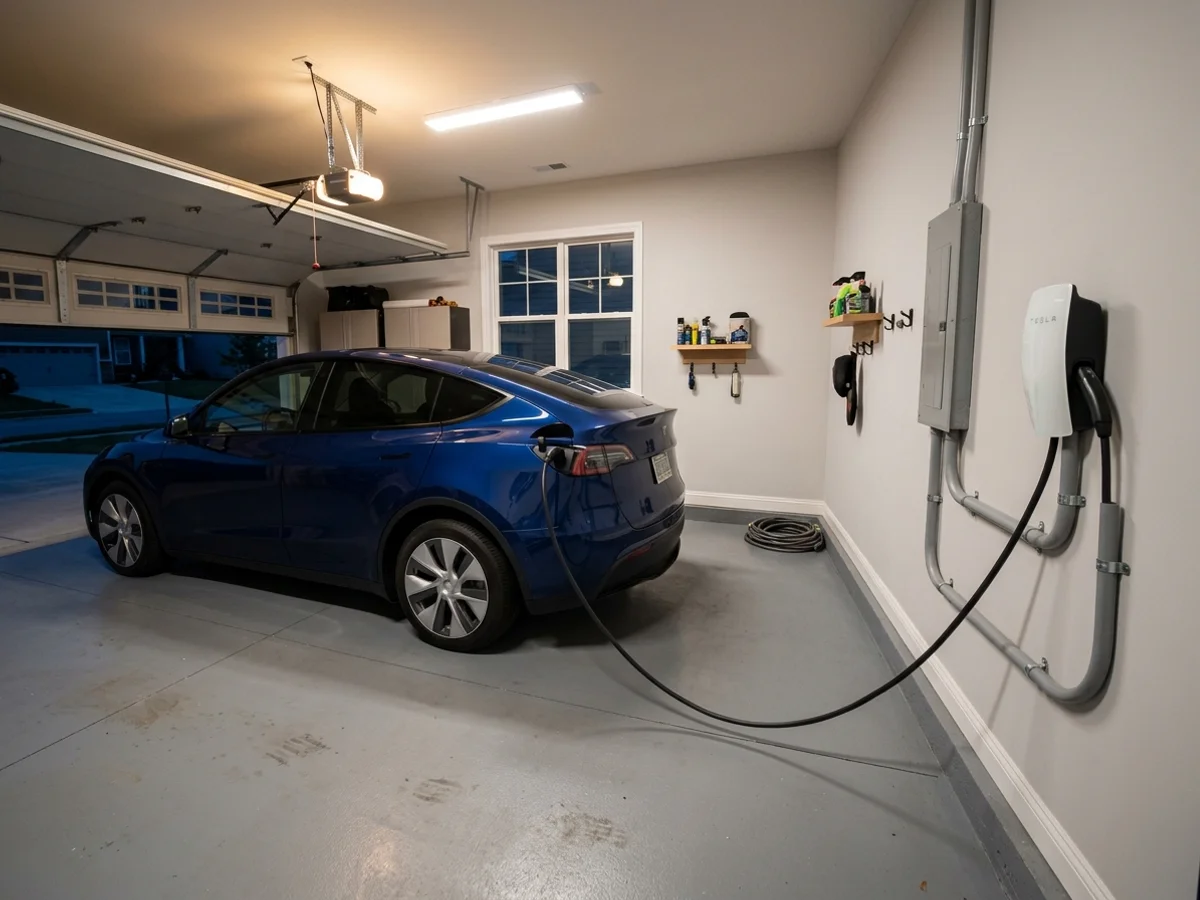
Level 2 EV charger installed in a residential garage in Kirkland

Common EV Charger Problems Homeowners Run Into

Most home charging problems fall into a handful of familiar patterns. Knowing what each one can mean makes the phone call easier — and helps you describe the issue clearly.

Charger Has No Power

When a wall-mounted charger shows no lights at all, the first question is whether the unit is receiving power. A tripped breaker is a common culprit, and a problem in the circuit or wiring behind the charger can cut power off entirely. In some cases the charger hardware itself has failed. An electrical service provider can check whether power is reaching the circuit and whether the breaker, wiring or connection is the source of the outage.

Breaker Trips During Charging

Level 2 charging places a sustained, heavy load on a circuit for hours at a time. If the breaker trips every time charging starts — or partway through a session — that pattern deserves a professional inspection. Repeated tripping can point to an overloaded circuit, a weak breaker, loose connections, damaged wiring, or a charger drawing more current than the circuit is rated for. This is not a problem to troubleshoot by repeatedly resetting the breaker.

Charging Starts and Stops

Sessions that begin normally and then cut out can have several causes: an intermittent electrical supply, a loose connection at the outlet or hardwired terminal, overheating that triggers a safety shutoff, a fault inside the charger, or a communication issue between the charger and the vehicle. Narrowing down whether the power supply is steady is a good starting point — and that is where an independent electrical service provider can help.

Charging Is Slower Than Expected

Slower charging isn't always an electrical fault. Charger settings, the vehicle's onboard charging limits, and the circuit's configuration all affect speed. That said, voltage drop from undersized wiring, a loose connection, or a circuit that isn't delivering what it should can also slow things down. A professional can measure what the circuit is actually supplying so you're not guessing at the cause.

Outlet or Hardwired Connection Problems

Many home chargers plug into a NEMA-style 240-volt outlet, while others are hardwired directly. Both can develop problems over time: outlets that look discolored or feel warm, plugs that no longer fit snugly, hardwired terminals that have loosened. Heat at a connection is a warning sign that warrants prompt, professional attention — not a DIY fix. An electrical service provider can evaluate the outlet, wiring and connections safely.

Charger Needs Replacement

Sometimes replacing the wall unit is more practical than repairing internal charger hardware — especially when parts aren't available or the manufacturer no longer supports the model. Even then, electrical work is usually part of the job: safely disconnecting the existing unit, inspecting the circuit, confirming compatibility with your electrical setup, and connecting the replacement correctly.

Level 2 EV Charger Troubleshooting in Kirkland

Most home charging setups in the Kirkland area use a Level 2 charger — a 240-volt unit that charges several times faster than a standard household outlet. Because a Level 2 charger runs on its own dedicated circuit, a problem can sit anywhere along the path power takes from the panel to your vehicle.

That's why a charger that "seems broken" is sometimes working exactly as designed — and the electrical system behind it isn't. Careful troubleshooting looks at the whole chain:

  • The charger unit itself
  • The dedicated 240-volt circuit
  • The breaker protecting that circuit
  • The wiring in the wall
  • The receptacle or hardwired connection
  • The electrical panel's available capacity
  • The quality of the original installation

Troubleshooting of this kind is hands-on electrical work — it belongs to a qualified professional, not a DIY checklist.

Is the Problem the Charger or Your Home's Electrical System?

An EV charger problem can originate in more than one place, and which side of the system is at fault changes what kind of help you need.

Electrical-side issues

Problems with the power supply to the charger.

  • Breaker trips during charging
  • Circuit loses power
  • Overheated outlet
  • Damaged receptacle
  • Loose wiring or connections
  • Insufficient circuit capacity
  • Panel-related issue
  • Hardwired connection issue

Charger / equipment-side issues

Problems with the charging unit or its hardware.

  • Internal charger fault
  • Error codes on the unit
  • Communication failure with the vehicle
  • Damaged charging cable or connector
  • Charger electronics failure
  • Manufacturer software or firmware issue

Electrical service providers can inspect supply-side problems like the ones on the left. Internal, proprietary charger faults generally require manufacturer support or equipment replacement — an honest assessment will tell you which situation you're in before any work begins.

Not Sure What's Causing the Problem?

Describe what your charger is doing and discuss the issue with an independent electrical service provider.

Call (425) 363-8378

Availability, pricing and service details are discussed directly with the independent provider.

Troubleshooting Home EV Charging Equipment

Home charging equipment comes in many forms — a Tesla Wall Connector, a ChargePoint Home Flex, a Wallbox, an Emporia, an Autel, JuiceBox-style residential units and other Level 2 chargers. Whatever the brand, the electrical side of the system follows the same fundamentals: a dedicated circuit, correctly sized wiring, solid connections and adequate panel capacity.

  • Tesla Wall Connector
  • ChargePoint Home Flex
  • Wallbox
  • Emporia
  • Autel
  • JuiceBox-style units
  • Other Level 2 chargers

Problems involving electrical supply, wiring or dedicated circuits may be suitable for an electrical service provider to inspect. Internal equipment faults — error codes that point to the unit's own electronics, failed internal components, or manufacturer firmware issues — may require the manufacturer's support or a replacement unit.

This website is not affiliated with, sponsored by, or authorized by any charger manufacturer. Brand names are mentioned only to describe common residential equipment.

The electrical system behind the charger

Can Your Electrical Panel Support EV Charging?

Some charging problems trace back not to the charger or its circuit, but to the electrical system as a whole.

  • Limited panel capacity
  • Older electrical equipment
  • Undersized circuits
  • Breaker issues
  • Load-management needs as household electrical demand grows

Whether your panel can comfortably support a Level 2 charger depends on its size, its condition and the rest of the home's electrical load. A qualified electrical professional can evaluate the system and tell you what's actually happening — which may turn out to be nothing more than a circuit-level fix. A panel upgrade is not automatically required for every charging problem.

EV Charger Repair or Replacement?

Both paths are common, and the right one depends on where the fault sits. These are the situations where each typically makes sense.

Repair or troubleshooting may make sense when

  • Charger loses power
  • Breaker trips during charging
  • A wiring issue is suspected
  • Outlet or receptacle problem
  • Hardwired connection issue
  • Intermittent electrical supply

Replacement may make more sense when

  • Internal hardware has failed
  • Charger is physically damaged
  • Replacement parts are unavailable
  • Manufacturer recommends replacement
  • Homeowner is upgrading charging equipment

Either path can involve electrical work — disconnecting an old unit, inspecting the circuit, or connecting new equipment safely.

Call (425) 363-8378

Connect with an independent electrical service provider serving the Kirkland area.

Get Help With Your EV Charging Problem

Call to discuss your home charging problem and connect with an independent electrical service provider serving Kirkland.

Focused on Home Charging Issues

This site exists for one situation: homeowners in Kirkland dealing with residential EV charging electrical problems. Not commercial fleets, not public stations — just home charging.

Direct Phone Connection

One call puts you in touch with an independent electrical service provider. Describe the problem in your own words and get a direct answer about what may be involved.

Repair or Replacement Discussion

The service provider can help determine whether electrical troubleshooting or equipment replacement may be the appropriate next step for your situation.

Kirkland-Focused

Focused specifically on residential EV charging problems affecting homeowners in Kirkland, Washington.

How It Works

Getting started is straightforward.

  1. Call

    Describe what your home EV charger is doing.

  2. Discuss the Issue

    Talk with an independent electrical service provider about the problem, service availability and what may need to be inspected.

  3. Decide What to Do Next

    Discuss scheduling, pricing and any proposed work directly with the provider.

EV Charger Help for Kirkland Homeowners

Home EV charging is increasingly common in Kirkland, with Level 2 equipment installed in garages, driveways and carports across both older and newer homes. The electrical setup behind each charger can vary considerably, from newer panels with available capacity to older systems that may require closer evaluation.

Whatever the setup, the fundamentals are the same — a dedicated 240-volt circuit, sound wiring, solid connections and a charger that works correctly. When any part of that chain has a problem, the charging experience suffers first.

This site was built for Kirkland homeowners trying to sort out exactly that: a home EV charger that won't power on, keeps tripping the breaker, cuts out mid-session or charges slower than it should. If that's where you are, a phone call is the fastest way to start narrowing it down.

EV Charger Repair FAQs

Straight answers to the questions Kirkland homeowners ask most about home EV charging problems.

Why does my EV charger keep tripping the breaker?

Repeated tripping usually means the circuit is being overloaded, the breaker is weak or failing, there is a loose or damaged connection somewhere in the circuit, or the charger is drawing more current than the circuit is rated to supply. Because EV charging places a sustained heavy load on the circuit, this pattern should be inspected rather than repeatedly reset.

Who should I call when my home EV charger stops working?

Start with an electrical service provider — this site connects Kirkland homeowners with an independent provider by phone. Keep the charger manufacturer's support line in mind as well: if the unit itself has failed internally, the manufacturer may need to be involved.

Can an electrician repair an EV charger?

An electrician can inspect electrical supply-side problems such as breakers, wiring, circuits, receptacles and hardwired connections. Internal charger hardware faults may require manufacturer support or replacement.

Why is my Level 2 charger not turning on?

Common causes include a tripped breaker, power not reaching the circuit, a wiring or connection problem, or an internal fault in the unit itself. Checking whether the breaker has tripped is a safe first look; beyond that, the circuit and the charger should be evaluated by a qualified professional.

Why does my EV charger stop charging randomly?

Intermittent charging can come from an unstable electrical supply, a loose or overheating connection, a charger safety shutoff, or a communication issue between the vehicle and the charger. Determining whether power delivery to the charger is stable is a common first step in troubleshooting.

Can a bad EV charger damage an outlet or circuit?

Potentially. A charger with an internal fault, or one drawing improper current, can put stress on the outlet and circuit it is connected to, and heat at a connection is a known warning sign. If you notice warmth, discoloration or a burning smell around the outlet or charger, stop using the equipment and have it evaluated promptly.

Does an EV charger need a dedicated circuit?

Many Level 2 installations use a dedicated circuit, and most manufacturer instructions call for one, but the exact requirements depend on the equipment and your home's electrical configuration. If you are not sure how your charger's circuit is set up, an electrical professional can identify it.

Can an old electrical panel cause EV charging problems?

It can. Limited panel capacity, older equipment and worn breakers can all interfere with sustained Level 2 charging, or rule it out entirely until the system is evaluated. Whether a panel can comfortably support EV charging depends on its size, condition and the rest of the home's electrical load.

Should I repair or replace my home EV charger?

It depends on where the fault is. Electrical-side problems — circuits, breakers, wiring, outlets, connections — may be repairable by an electrical service provider. Internal hardware failures often make replacement more practical, especially when parts are unavailable or the manufacturer recommends replacing the unit.

Can you repair Tesla Wall Connectors?

Electrical-side issues affecting a Tesla Wall Connector, such as circuit, breaker, wiring or power-supply problems, may be inspected by an electrical service provider. Internal Tesla equipment faults may require Tesla support or replacement. This website is not affiliated with or authorized by Tesla.

Having Trouble With Your Home EV Charger?

Call to discuss the problem with an independent electrical service provider serving the Kirkland area.

Call (425) 363-8378

Availability, pricing and service terms are determined directly by the independent provider.